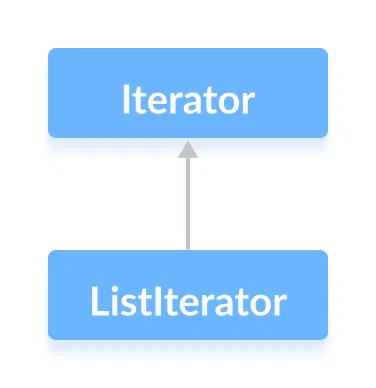
The Iterator interface of the Java collections framework allows us to access elements of a collection. It has a subinterface ListIterator.
All the Java collections include an iterator() method. This method returns an instance of iterator used to iterate over elements of collections.
Methods of Iterator
The Iterator interface provides 4 methods that can be used to perform various operations on elements of collections.
hasNext()- returnstrueif there exists an element in the collectionnext()- returns the next element of the collectionremove()- removes the last element returned by thenext()forEachRemaining()- performs the specified action for each remaining element of the collection
Example: Implementation of Iterator
In the example below, we have implemented the hasNext(), next(), remove() and forEachRemining() methods of the Iterator interface in an array list.
Output
ArrayList: [1, 3, 2]
Acessed Element: 1
Removed Element: 1
Updated ArrayList: 3, 2,
In the above example, notice the statement:
iterate.forEachRemaining((value) -> System.put.print(value + ", "));
Here, we have passed the lambda expression as an argument of the forEachRemaining() method.
Now the method will print all the remaining elements of the array list.